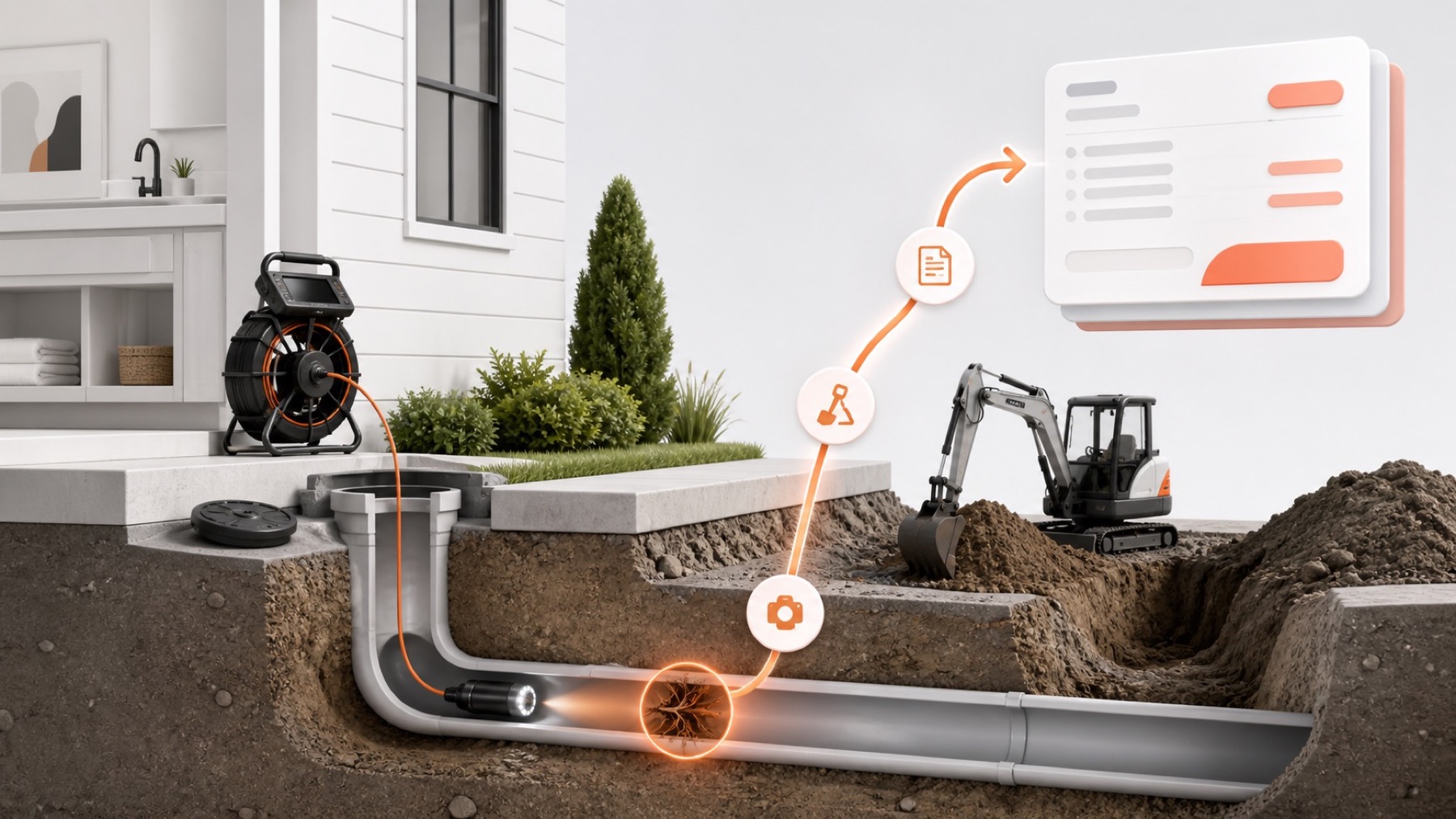
Plumbing Water Damage Documentation: A Job-Record Workflow for Clear Next Steps
Build This In Joby
When a plumbing visit includes water damage, the job record has to do more than show that a technician arrived. The customer may need to understand what was observed, what was stopped or stabilized, which areas still need attention, and who owns the next decision. A few clear, dated observations can prevent a repair conversation from becoming a dispute about what the property looked like when the team was there.
This is not an insurance-adjusting process or a substitute for qualified restoration, environmental, or legal advice. It is an operational documentation workflow: capture what your team directly observed, label what remains unverified, preserve the customer's reported timeline separately, and keep the next action visible to the person responsible for it.
Start with safety and active conditions. Follow your company's emergency and safety procedures before taking photos or completing notes. Record the reported issue, visible source or affected area if known, whether water was active when the team arrived, and the immediate action taken. Do not turn a quick observation into a causal conclusion. If a condition needs specialist assessment, identify the referral or escalation step rather than writing beyond what the technician can support.
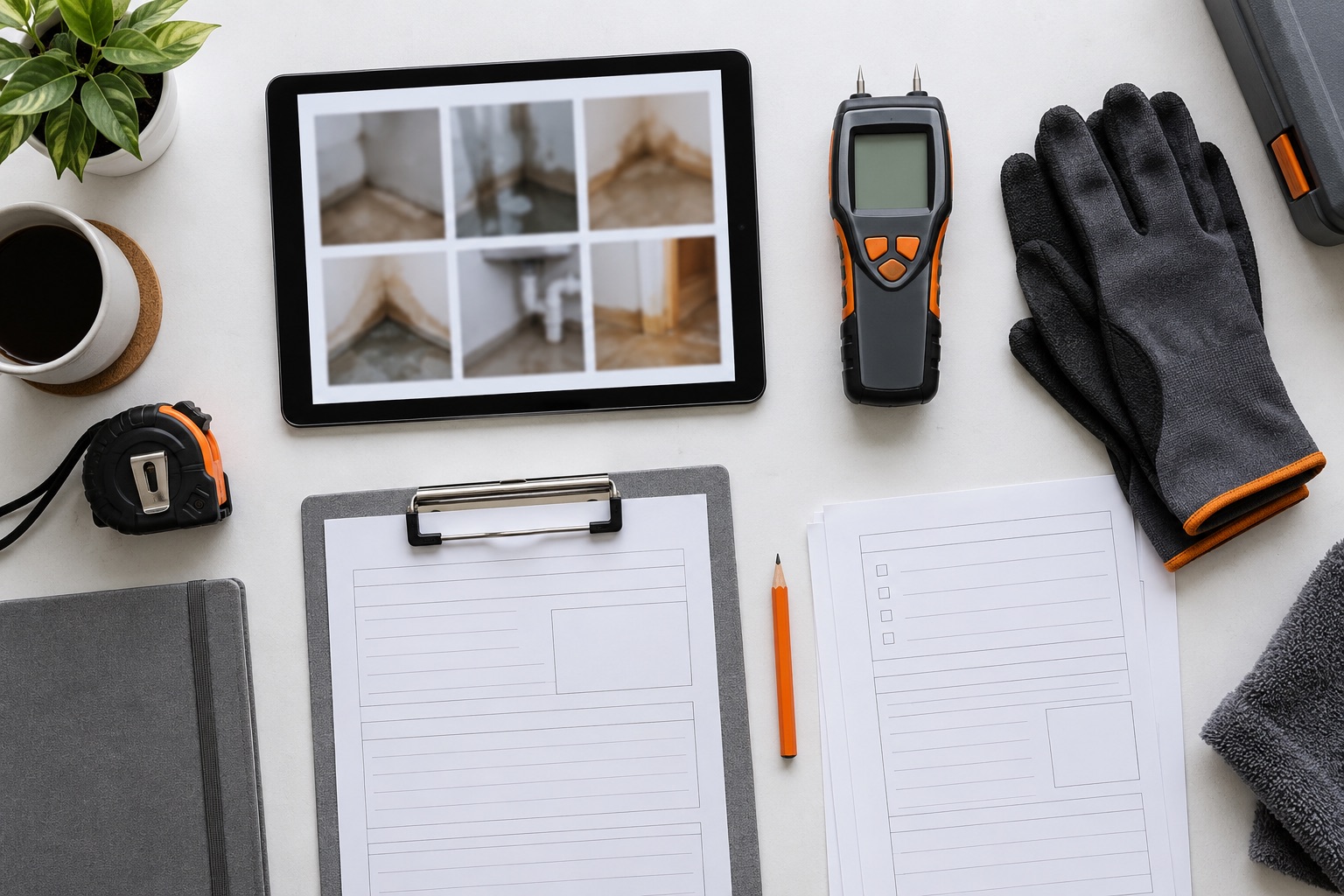
Use photos as evidence, not decoration. Take an overview that establishes the location, then closer images of the relevant fixture, connection, affected surfaces, or visible staining. Add a short caption stating what the photo shows and when it was captured. Photos should be clear enough for the next team member to orient themselves, but avoid unnecessary personal belongings, family images, screens, and other private details. Follow the customer's permission and your data-handling policy.
Separate reported facts from observed facts. A customer may say the leak began overnight; the technician may observe damp flooring and a failed supply line. Both matter, but they are different kinds of information. Write customer-reported timing as reported, direct observations as observed, and proposed next steps as recommendations. That separation makes the record easier to review and reduces the risk that an office summary accidentally converts a report into a guarantee.
Describe boundaries around the plumbing scope. State what the plumbing team repaired, tested, isolated, or could not access. If drying, material removal, electrical work, or restoration is outside the approved scope, identify that boundary plainly. A customer who hears the leak is stopped may reasonably need to know that damaged finishes or moisture assessment require a separate next step. Do not imply that a plumbing repair alone restores every affected surface.
Create one owner for the open next step. The next action might be an estimate, a return visit, a customer decision, a referral, or a manager review. Assign it to a person and date rather than leaving it inside a photo caption. If the team has promised a callback, record the promise and what information the owner must bring. This is especially important when an emergency technician and an office coordinator work different shifts.
Explain the record to the customer without overpromising. Summarize the work performed, the visible condition noted, any outstanding limitation, and the next planned action. Keep the explanation factual. Do not promise insurance coverage, drying results, or a final cause before the responsible professional and any required investigation have completed their work. When a customer needs a copy of a document, use your established approval and sharing process.
Keep versions of the scope understandable. If an initial repair estimate changes after access improves or testing reveals another issue, retain the earlier description and document the reason for the revision. A revised recommendation is not a failure when the job record explains what new information changed the plan. The same discipline helps office staff answer questions without reconstructing the entire job from separate messages.
How Joby supports the workflow. Joby's customer and job records, notes, documents, photos, estimates, tasks, appointments, and communication history can keep the field evidence and follow-up connected. The plumber and business remain responsible for diagnosis, safety, code compliance, restoration coordination, insurance communications, and deciding what evidence supports a particular conclusion.
Audit for usefulness. Review a few water-damage records each month and ask whether another qualified teammate could identify the affected area, see what was done, distinguish observations from reports, and find the next owner. If not, improve the smallest missing element—often photo captions, task ownership, or scope boundaries. A well-kept record protects continuity even when the original technician is not available for the next conversation.