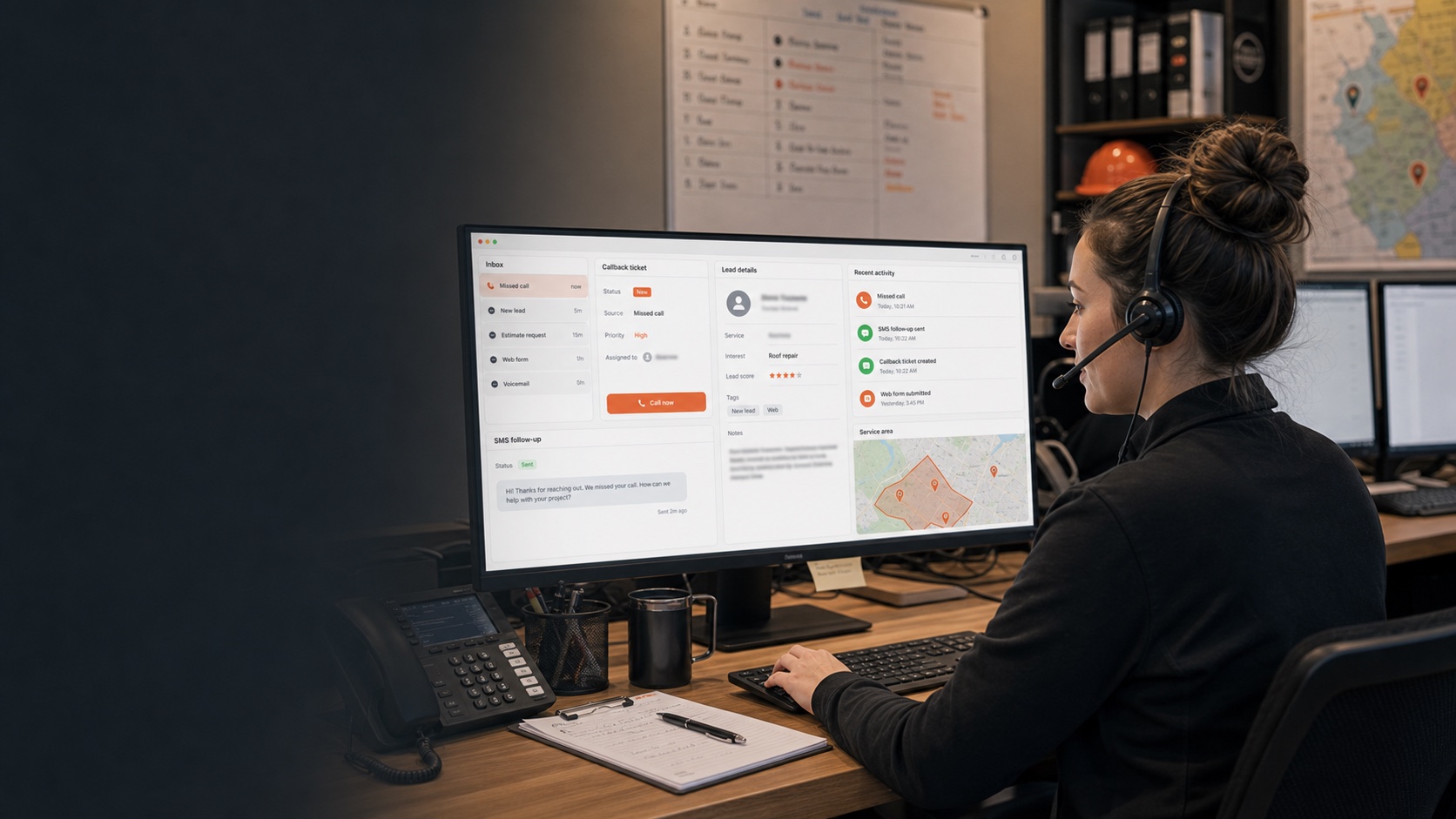

Home Service Call Routing: Build a Clear Path From Ring to the Right Next Step
A ringing phone is a live operating decision. If the caller reaches the wrong person, waits too long, or repeats the same details three times, the cost is more than an abandoned call. Dispatch loses time, a technician may be sent without context, and the customer starts the relationship frustrated. A good routing workflow gives each common call type a clear first destination and a visible backup.
Start with the decisions, not the phone tree. List the calls your team receives most often: a new repair request, an existing customer checking an appointment, an emergency, a payment question, a supplier, and a crew member needing the office. For each, define the first owner, what information that owner needs, and when the call should move to someone else. Keep the first version short enough that a new coordinator can explain it without a diagram.
Separate urgency from value. A caller asking about a future replacement quote may be important, but a possible active leak or no-heat call needs a different route and response expectation. Write an escalation rule in plain language: what the receiver should confirm, who is on the escalation list, and what to do if nobody answers. Do not promise immediate dispatch unless availability and company policy support it.
Give the first receiver a compact intake. The goal is not to diagnose the job on the phone. Capture the caller's name, address or service area, contact preference, service issue in the caller's words, urgency signals, and any access constraint. Joby can keep call-related notes, customer history, appointments, tasks, and follow-up activity associated with the record so the next person has the same starting point. Staff still need to verify details before promising price, arrival timing, or scope.
Define overflow before it happens. Decide how long the primary group rings, which role receives an overflow, and what happens after business hours. The backup should be able to take a message that is actually actionable, not simply tell callers to try again. For high-volume windows, assign a designated overflow owner and a time to return missed calls. Review whether routing sends callers to the right team, rather than treating every unanswered call as an individual performance problem.
Use a consistent handoff note. A useful internal note names the reason for the call, what was confirmed, what was not promised, the customer’s preferred next step, and the assigned owner. Avoid relying on a verbal hallway handoff for a call that affects today’s schedule. If a dispatcher, sales representative, or on-call technician must act, create the task or documented follow-up before the receiver moves on.
Test with real scenarios. Once a month, have someone place a controlled test call for a new lead, an appointment question, an urgent issue, and an after-hours message. Measure the route, the information captured, the owner assigned, and whether a return call occurred. This exposes a stale extension, unclear escalation list, or script gap long before a busy weather event does.
Review routing patterns, not just call volume. Look for calls transferred repeatedly, messages without an owner, urgent calls handled as generic leads, and common questions that could be answered earlier in confirmation messages. Adjust the written rules when the operating model changes. A reliable routing system is a living agreement between the office, dispatch, and field team—not a one-time phone configuration.