
Missed Call Text Back: The Simple Workflow That Saves Home Service Leads
For most home-service businesses, a missed call is not just a missed conversation. It is a buyer with active intent who is usually calling three companies in a row. If the first business answers, books, or follows up with confidence, the lead often stops shopping. If the call goes unanswered and the customer hears nothing for 20 minutes, that lead may already be gone.
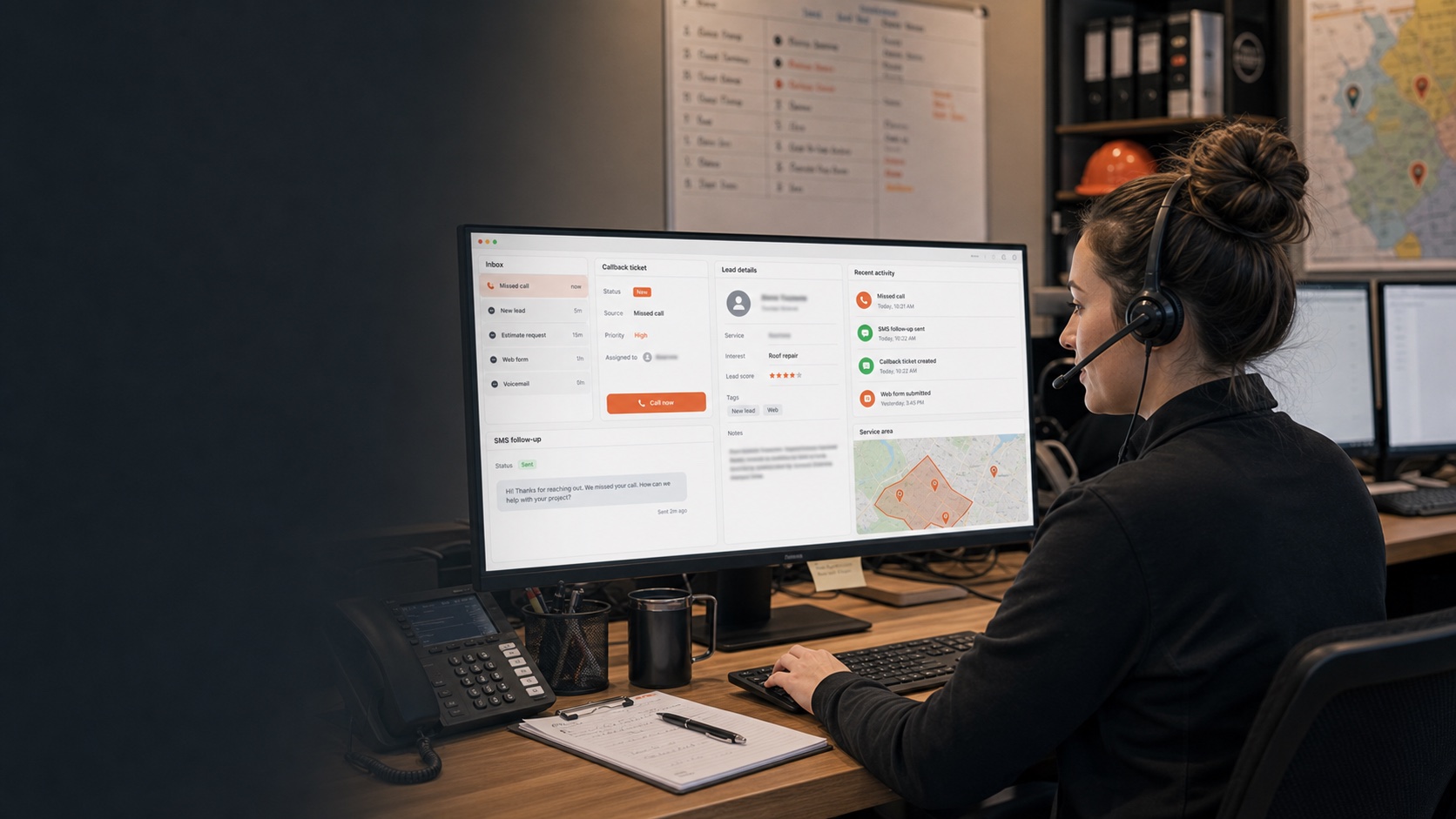
A missed call text-back workflow is one of the simplest ways to close that gap. The idea is straightforward: when a call is missed, the CRM immediately sends a short SMS from the business number, creates a callback task, attaches the call to the lead record, and gives the team a clear next action. It does not replace a human callback. It buys time and keeps the customer engaged until the callback happens.
Why missed calls hurt service businesses so badly. Home-service demand is usually urgent. A homeowner with a leak, lockout, broken AC, roof damage, or garage door problem is not browsing for fun. They want the first competent business that responds. Even for non-urgent jobs, speed shapes trust. A fast response tells the customer your operation is organized; a silent missed call tells them they may need to keep searching.
The ideal missed call workflow. The best workflow has four parts. First, the phone system logs the missed call with caller ID, number dialed, time, and call source. Second, the CRM attempts to match the phone number to an existing lead or customer. Third, the system sends a short text acknowledging the missed call. Fourth, a callback ticket appears for the right person to work. If any one of those steps is manual, the process gets inconsistent under pressure.
The text message should be short. The goal is not to sell the job by SMS. The goal is to reassure the customer and restart the conversation. A good default message is: 'Sorry we missed your call. This is the team at [Business Name]. Reply here with what you need help with, or we will call you back shortly.' That message is polite, clear, and easy for the customer to answer from their phone.
Segment by urgency when possible. Not every missed call deserves the same priority. A missed call from a Google Ads number during business hours should be worked quickly. A missed call from an existing customer with an active job may need even faster handling. A missed call after hours can be routed to an AI voice agent, an on-call dispatcher, or a morning callback queue depending on how the business operates.
Use callback tickets instead of memory. The biggest mistake is sending the text but not creating an owned task. Someone still has to call the lead. A callback ticket should show the caller, source, missed-call time, previous activity, and priority. It should be visible in one queue, not buried in the call log. The team should be able to mark it called, rescheduled, booked, or closed.
Track source and outcome. Missed calls become more useful when you can see where they came from. If one ad source produces a high missed-call rate, you may need staffing changes during peak hours. If after-hours calls convert well, an AI receptionist or on-call rotation may pay for itself. If missed calls from old estimates book at a high rate, callback campaigns become an easy revenue lever.
Compliance still matters. Text-back should only happen from a business number configured for compliant messaging. Keep messages transactional and expected: the customer called you, and you are responding to that call. Include opt-out handling in your broader SMS program, keep your brand clear, and avoid blasting promotional language in a missed-call reply.
How Joby supports this workflow. Joby combines the phone system, CRM record, SMS history, and callback tickets in one place. Missed calls can be reviewed alongside lead history, source, notes, and follow-up status. Teams can work callbacks from a shared queue instead of bouncing between a phone app, spreadsheet, and text inbox.
The bottom line. Missed call text-back is not a fancy automation. It is basic operational hygiene for phone-heavy service businesses. If your team misses calls, the customer should hear from you immediately, the callback should become owned work, and the result should be measurable. That simple loop saves leads without adding headcount.