
On-Call Rotation and Phone Coverage for Home Service Teams
Build This In Joby
An on-call rotation fails long before a technician misses a call. The schedule lives in a group text, the phone flow still points to last week's person, nobody knows which situations justify waking a technician, and the morning office inherits promises without a record.
Reliable home service phone coverage needs three connected plans: who is available, which calls reach them, and how every after-hours outcome returns to the daytime team. The rotation is a workflow, not merely a name on a calendar.
Define the coverage window. Write down exactly when daytime ownership ends, when on-call coverage starts, and what happens during lunch, meetings, holidays, severe weather, and shift overlap. Ambiguous boundary times are where callers bounce between queues or receive conflicting answers.
Publish a primary and backup. Every shift needs a named primary, a backup, and a manager escalation path. Include trade, service area, vehicle or equipment constraints, and any limits on what the person can accept. Confirm the rotation before it begins rather than discovering a conflict on the first urgent call.
Screen before ringing the technician. Separate active hazards, no-heat or no-cool policy cases, lockouts, sewer backups, existing-job issues, and routine quote requests. Collect the customer's location, callback number, problem summary, access constraints, and immediate safety concern before transfer. Screening protects the customer and prevents unnecessary wake-ups.
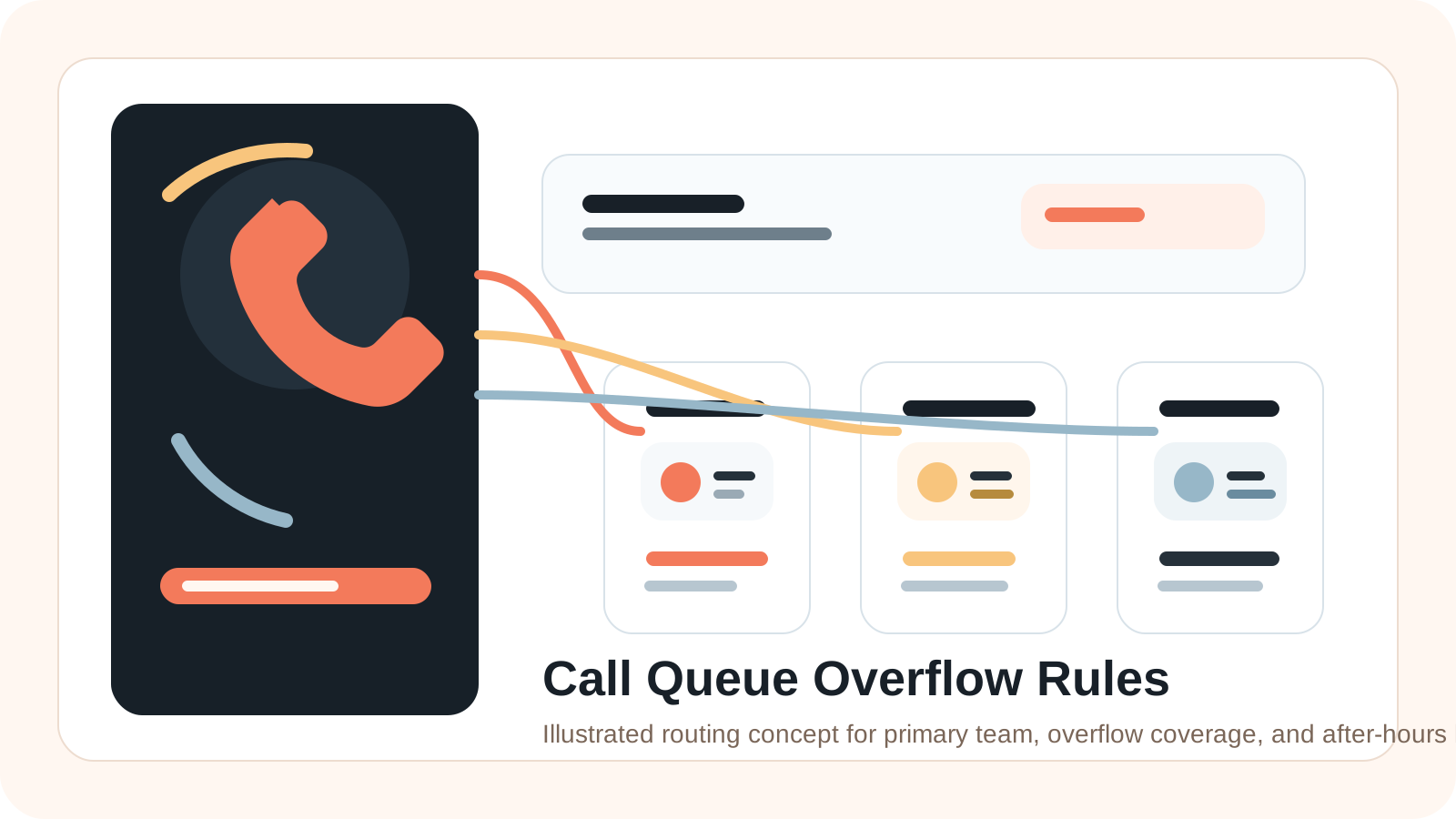
Set attempt and fallback rules. Define how long the primary has to answer, how many attempts occur, when the backup receives the call, and when a manager must be notified. If nobody accepts the work, the caller should receive an honest next step and a tracked callback commitment—not an endless ring cycle.
Separate phone acceptance from dispatch commitment. Answering a call does not automatically mean a technician is en route. The on-call person must review scope, distance, skill, safety, and availability before promising service. Use a clear status such as awaiting acceptance, accepted for callback, scheduled, or declined with reason.
Create the morning handoff. Review every after-hours call, voicemail, booking, declined job, estimate request, and customer promise. Assign unresolved items to the daytime team with an owner and due time. This is where after-hours coverage becomes part of the CRM record instead of a separate world.
Protect the people in the rotation. Define maximum consecutive coverage, rest expectations, compensation, swap procedures, and escalation for unsafe conditions according to applicable labor rules and company policy. Track workload by person so one technician does not quietly absorb every difficult night.
Audit outcomes weekly. Measure calls offered, answered, accepted, booked, missed, escalated, and converted to completed work. Review repeat callers, incorrect transfers, response gaps, and promised callbacks. Numbers should improve staffing and rules, not pressure technicians to accept unsafe or unqualified work.
How Joby supports the workflow. Joby's phone system, call flows, schedules, customer history, call records, tasks, and dispatch context help teams keep coverage and follow-up connected. The business still defines emergency policy, staffing, compensation, safety rules, and service commitments.
The bottom line. A healthy on-call rotation makes ownership visible before the phone rings. Pair the schedule with screening, backups, honest status language, and a disciplined morning handoff so both customers and technicians know what happens next.