Estimate Follow-Up Cadence: When to Call, Text, and Email After Sending a Quote
Most service businesses do not lose estimates because the customer said no. They lose them because nobody followed up in a useful way. The quote was sent, the customer got busy, a competitor called, the project changed, or the homeowner had one unanswered question. A good follow-up cadence keeps the conversation alive without making the team sound desperate.
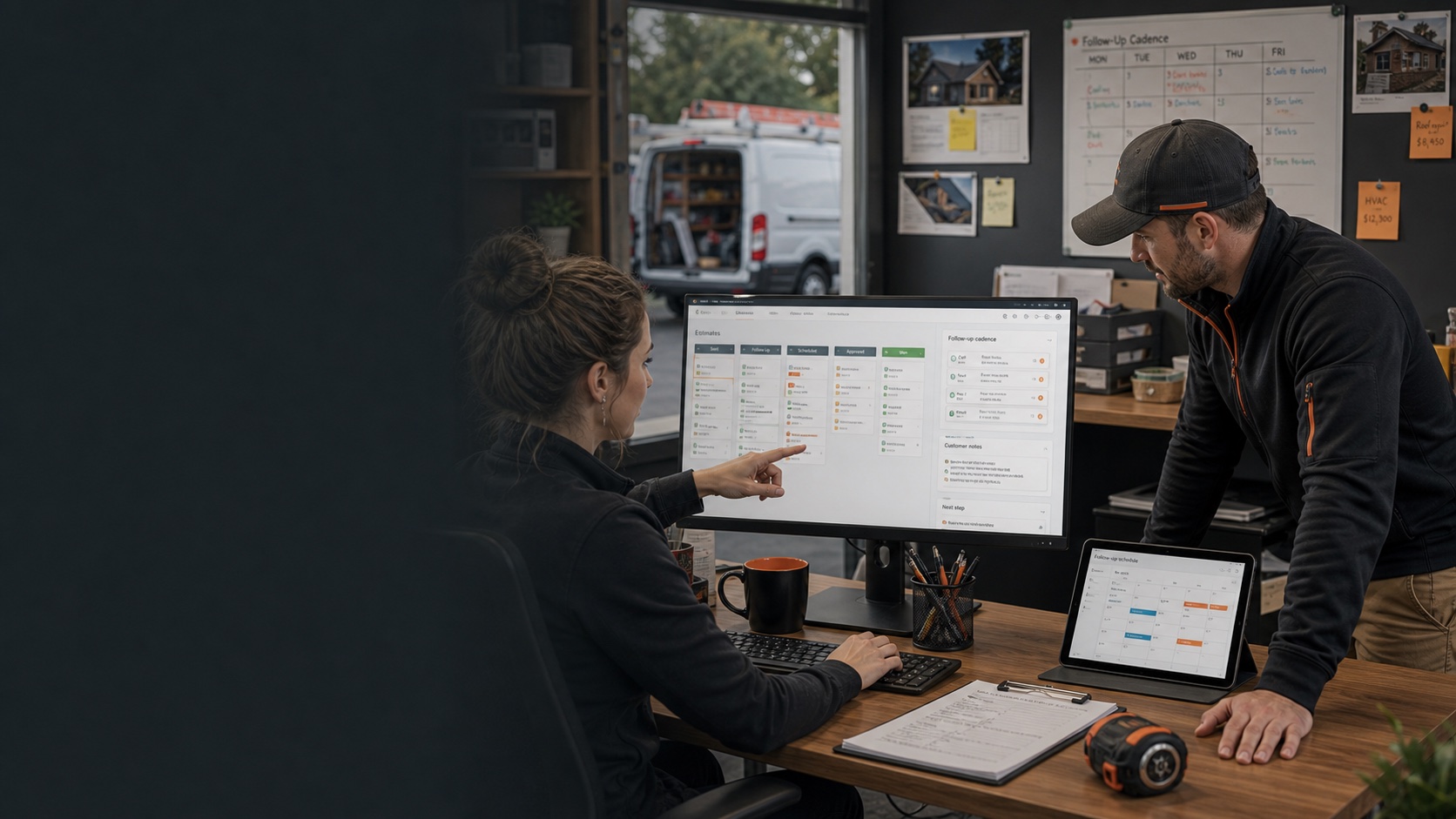
The right cadence depends on job value and urgency, but the structure is consistent: confirm receipt, clarify questions, create urgency around scheduling, and eventually close the loop. The CRM should show which step each estimate is on and pause the sequence when the customer replies.
Day 0: confirm the estimate was sent. Within minutes of sending the quote, send a short SMS: 'Hi [Name], we just sent the estimate for [project]. Reply here if you have any questions.' This is not a sales pitch. It confirms delivery and gives the customer an easy reply channel.
Day 1: call while the estimate is fresh. The best first call is simple: 'I wanted to make sure the estimate came through and see if anything needs clarification.' If the customer answers, do not rush to discount. Ask what they think, whether the scope is clear, and what timeline they have in mind.
Day 3: send a helpful recap. Email is good for detail. Summarize the scope, timeline, warranty, payment options, and next step. This is especially useful for roofing, HVAC, plumbing, garage door, and larger repair projects where the buyer may be comparing multiple bids.
Day 5: text a low-friction question. A good message is: 'Any questions on the estimate, or should we check back next week?' This gives the customer permission to say not now. It also prevents your team from calling repeatedly when the buyer is not ready.
Day 7: call with a next-step frame. Try: 'We are planning next week's schedule and wanted to see if you want to reserve a spot or if you are still deciding.' This is honest and practical. It creates urgency without fake scarcity.
Day 10: handle the common blockers. At this point, the blocker is usually price, timing, spouse/partner review, financing, insurance, or scope confusion. The CRM should let reps tag the blocker so future follow-up is specific. A price-concern follow-up is different from a waiting-on-insurance follow-up.
Day 14: close the loop. Closing the loop is respectful: 'We have not been able to connect, so we will pause follow-up for now. If you want to move forward later, reply here and we can help.' This keeps the brand clean and prevents endless chasing.
High-value estimates need owner visibility. Any estimate above a meaningful threshold should be visible to the owner or sales manager. Watch estimate age, last touch, assigned rep, value, and blocker. A $15,000 estimate with no follow-up for nine days is not just a task problem. It is a revenue leak.
Use multiple channels carefully. Call, SMS, and email all have a role. Calls are best for questions and closing. SMS is best for fast replies and confirmations. Email is best for detail and attachments. The cadence works because the channels support each other, not because the customer is spammed.
The bottom line. Estimate follow-up should feel professional, consistent, and useful. Confirm delivery, call early, recap clearly, ask low-friction questions, tag blockers, and close the loop when needed. The teams that do this well win more estimates without becoming pushy.